MozLife

Pretória sob tensão com protestos anti-imigração e alertas à comunidade africana

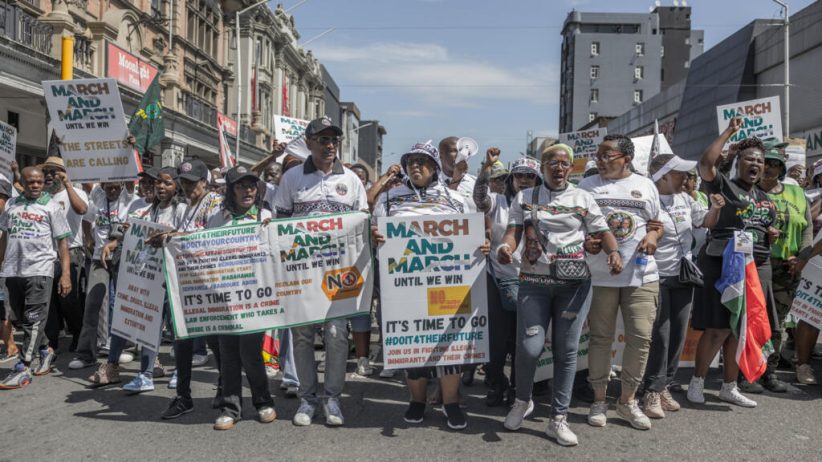
African migrants in the South African capital, Pretoria, were urged to exercise "heightened vigilance" during an anti-illegal immigration march, amid fears of xenophobic attacks. Ghana's high commission advised its nationals to close businesses and keep a "low profile", while the head of the Nigerian Union of South Africa told its members to remain indoors. Another march is due on Wednesday in Johannesburg. Anti-migrant sentiment has gained political currency in recent years with some believing foreigners are taking jobs and unfairly benefiting from public services. But the president said citizens should not allow their concerns to "breed prejudices and hatred towards our fellow Africans". Condemning recent attacks on foreigners, President Cyril Ramaphosa used his Freedom Day address on Monday - marking the country's first democratic elections in 1994 - to also remind his country of their debt to other nations on the continent in supporting their struggle against the racist system of apartheid. On Tuesday, hundreds took to the streets of Pretoria in a protest organised by March and March, heading towards the Union Buildings, the official seat of the government. Some wore T-shirts with slogans, while others chanted and held handmade signs. One demonstrator told the BBC that the "influx of illegal immigrants" was why he was there, a matter he says politicians are not doing anything about. "We are grateful that we now have groups like this that have come up to aid the voice of what we have always been preaching about - illegal immigration is a big problem to our society." Previous protests linked to immigration have sometimes escalated into violence, prompting calls for restraint and protection of vulnerable communities. South Africa is home to about 2.4 million migrants, just less than 4% of the population, according to official figures. Most come from neighbouring countries such as Lesotho, Zimbabwe and Mozambique, which have a history of providing migrant labour to their wealthy neighbour. Xenophobia has long been an issue in South Africa which has been accompanied by occasional outbursts of deadly violence BBC / Thuthuka Zondi Protesters. The man in the centre in holding up a sign, which reads: March and March until we win. If fighting for my country means I'm xenophobic then I'm proudly xenophobic.BBC / Thuthuka Zondi Ghana's diplomatic mission told Ghanaians in the country to "place the highest priority on personal safety... [and] take precautionary measures" during the protests. The advisory on Tuesday "strongly encouraged" shop owners to close businesses, avoid areas where demonstrations are taking place, and not to take part in public gatherings that could "escalate into confrontation". Similarly, chairman of the Nigerian Union in South Africa, Olaniyi Abodedele, told members of his community to "close their shops... to be indoors and not go outside". "We are all very careful," he told the BBC's Pidgin service. "We are in the dark because we don't know how our government [in Nigeria] is going to react if any of us is to be affected or is to be killed." According to the Nigerian community leader, both Pretoria and Johannesburg have the "biggest" migrant communities. "I've been harassed," he told the BBC. "For us, it's not about whether you are legal or not, and that is why everyone is very careful right now." "As long as you are a Nigerian, you are profiled and you are stereotyped immediately." BBC / Thuthuka Zondi protesters in cultural headdresses and holding instrumentsBBC / Thuthuka Zondi Some protesters chanted and stopped for dances as they moved through the streets A distance away from the march, the BBC spoke to some Nigerians in Pretoria. One man, who had to close his shop, said he was not happy. "It is not okay because we are blacks, we are brothers... everybody comes here just to survive". A security guard, who was unable to go to work because of the protest, told the BBC "it's not what we expected as fellow Africans". "It's just making us scared - imagine if we're scared in our own African continent - what if we go to Europe?" he asked. Speaking about xenophobia in South Africa, UN Secretary-General Antonio Guterres condemned what he called "criminal acts perpetrated by individuals inciting violence and exploiting socio-economic conditions". In remarks delivered by his spokesperson Stéphane Dujarric on Monday, he reminded South Africans of how their struggle against apartheid was "sustained through international and African solidarity". The UN chief said he was concerned by reports of "xenophobic attacks and acts of harassment and intimidation", adding: "Violence, vigilantism and all forms of incitement to hatred have no place in an inclusive, democratic society." For more than a decade, the xenophobia directed at migrants has remained a political issue, especially as the country has one of the world's highest unemployment rates at around 33%. In recent years, the rise of ant-migrant groups such as March and March and Operation Dudula, have gained notoriety for their demands that foreign nationals be removed from the country. In February, South Africa's Zulu King Misuzulu kaZwelithini used a derogatory term for foreigners and said they should all leave, 11 years after his father urged migrants to "pack their belongings".

A capital sul-africana vive dias de elevada tensão, com protestos contra a imigração ilegal a mobilizarem centenas de pessoas nas ruas de Pretória. O movimento, que reflete um descontentamento crescente entre parte da população, levou missões diplomáticas africanas a emitirem alertas urgentes aos seus cidadãos, recomendando prudência máxima. O receio de novos episódios de violência xenófoba reacende memórias de crises anteriores no país.

PUBLICIDADE

Anuncie aqui!

Face à escalada da tensão, comunidades estrangeiras começaram a adaptar o seu quotidiano. Negócios foram encerrados, deslocações reduzidas e encontros públicos evitados. A sensação de insegurança instala-se rapidamente, sobretudo entre trabalhadores migrantes que dependem da economia informal para sobreviver. Em paralelo, líderes comunitários reforçam apelos à calma e à autoproteção.

O contexto atual não surge de forma isolada. Nos últimos anos, a questão migratória ganhou peso no debate político sul-africano, alimentada por uma taxa de desemprego elevada e por perceções de concorrência no acesso a empregos e serviços públicos. A imigração tornou-se um tema sensível, frequentemente explorado por movimentos e grupos organizados.

EWN Reporter's Video on X

Durante o protesto em Pretória, manifestantes marcharam até aos edifícios governamentais, exibindo cartazes e entoando slogans contra a presença de estrangeiros. Alguns participantes justificaram a mobilização com aquilo que descrevem como uma “pressão insustentável” sobre os recursos nacionais. O discurso, no entanto, levanta preocupações sobre o risco de estigmatização generalizada de comunidades inteiras.

PUBLICIDADE

Anuncie aqui!

As autoridades sul-africanas tentam equilibrar a resposta. O Presidente Cyril Ramaphosa condenou qualquer forma de violência e apelou à responsabilidade coletiva, lembrando o papel histórico de outros países africanos no apoio à luta contra o apartheid. O discurso oficial procura travar a escalada, mas enfrenta um terreno social cada vez mais polarizado.
Urban informal settlements – News, Research and Analysis – The Conversation – page 1

Organizações internacionais também reagiram. As Nações Unidas alertaram para o perigo de discursos de ódio e atos de intimidação, sublinhando que tais comportamentos não têm lugar numa sociedade democrática. A preocupação centra-se não apenas na segurança imediata, mas também na erosão do tecido social e da convivência entre comunidades.

PUBLICIDADE

Anuncie aqui!

A África do Sul acolhe cerca de 2,4 milhões de migrantes, muitos oriundos de países vizinhos como Moçambique, Zimbabué e Lesoto. Este fluxo tem raízes históricas ligadas ao mercado de trabalho regional, mas hoje enfrenta novos desafios num contexto económico mais pressionado. A coexistência entre cidadãos e migrantes torna-se, assim, um dos grandes testes sociais do país.
South Africa: Police Kill Bystander at Protest | Human Rights Watch

Com novos protestos previstos, nomeadamente em Joanesburgo, o cenário permanece incerto. Autoridades, diplomatas e líderes comunitários convergem num ponto: evitar uma escalada de violência. O desafio será conter a tensão sem ignorar as causas profundas que alimentam o descontentamento — num equilíbrio delicado entre segurança, economia e coesão social.

Submeta os seus anúncios online em 4 etapas simples — com pré-visualização imediata, estatísticas em tempo real e preços a partir de 1000 MZN.